Learn how U.S. businesses can succeed with email marketing in 2026 using proven strategies to increase engagement, conversions, and customer retention.
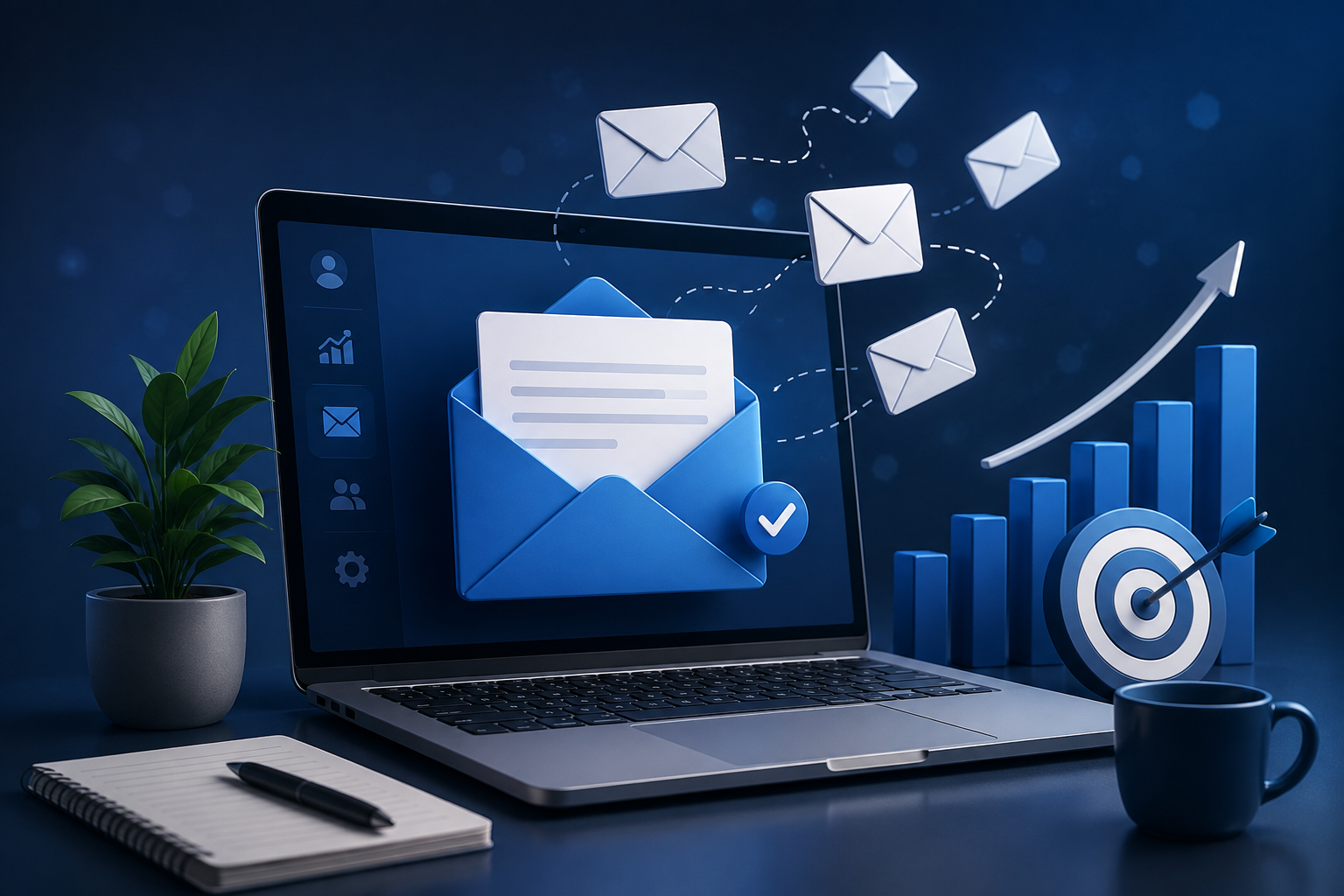
Email marketing is one of the oldest plays in the digital marketing book. It’s also, by a wide margin, the most profitable. While brands keep chasing the next hot social platform and dumping budgets into paid ads that return pennies on the dollar, a quiet channel keeps printing money in the background. We’re talking about email.
The numbers make it hard to ignore. According to Litmus, the average return on email marketing is $36–$42 per $1 spent. U.S. e-commerce brands specifically see returns of up to $72 per dollar — double the global average. For comparison, paid social typically returns between $2 and $5 per dollar. That’s not a close competition.
Yet a lot of American small and mid-sized businesses still treat email like an afterthought. They slap a newsletter together once a month, blast it to their entire list without segmentation, and wonder why open rates are flat, and unsubscribes keep climbing. The difference between a high-performing email program and a dead one usually comes down to a handful of early decisions. This post breaks down what actually works, why it works, and how to start doing it.
Before getting into tactics, it helps to understand why email keeps outperforming newer channels — because the reason is structural, not just statistical.
When you build a social media following, you’re renting an audience from a platform. Change its algorithm tomorrow, and your reach tanks. When someone buys ads, they’re paying for attention that stops the moment the budget runs out. Email is different. Your list is an asset you own. Nobody can take it away, no algorithm can bury it, and it doesn’t cost you every time someone opens a message.
That ownership piece matters more than most people realize. The email marketing industry is currently worth $13.72 billion globally and is growing at 10.82% annually. By 2027, the number of global email users is expected to hit 4.89 billion — that’s more than half the planet’s population. The channel isn’t shrinking. It’s growing.
There’s also a trust element. Statista found that 79% of millennials and 57% of Gen Z members actually want to be contacted by brands via email. Meanwhile, 59% of marketers say email is their single biggest source of ROI. The audience is there, the preference is there, and the economics are there. The only thing standing between most businesses and those results is execution.
None of this works without a healthy email list — and not all lists are created equal. A large, unengaged list is actually worse than a small, targeted one. Internet service providers track engagement signals. If your subscribers aren’t opening your emails, Gmail and Outlook start routing you to spam. Your deliverability tanks, which tank everything downstream.
The goal isn’t to collect as many addresses as possible. It’s to attract people who actually want to hear from you.
The single most reliable way to grow a quality list is to give something valuable in exchange for an email address. This is called a lead magnet, and the best ones solve a specific problem for a specific person.
A generic “Sign up for our newsletter” call to action converts poorly because it offers nothing. A “Download our free guide to lowering your energy bill this winter” converts much better because it has a concrete promise. The more specific and immediately useful the offer, the better.
For e-commerce businesses, popular lead magnets include:
For service businesses, case studies, templates, checklists, and free consultations tend to work well. The format matters less than the specificity. If your lead magnet solves a problem your target customer is actively thinking about, it will convert.
Placement drives volume. Most businesses bury a newsletter signup in their website footer and call it done. This is the equivalent of putting a billboard on a back road.
High-converting placements include:
There’s an ongoing debate in email marketing circles over whether to use single- or double-opt-in. Single opt-in adds the subscriber immediately upon form submission. Double opt-in sends a confirmation email first and adds them only after they click to confirm.
Double opt-in produces cleaner lists. Confirmation rates are typically 70–80%, meaning you’ll have a smaller list — but every address on it is real, and every person on it actively confirmed they wanted to hear from you. This translates to higher open rates, lower bounce rates, and fewer spam complaints. For most small businesses, the trade-off is worth it.
Welcome emails are the single most important emails you’ll ever send. The data on this is clear: welcome emails achieve an average open rate of 83.6%, the highest of any automated email type. Compared to standard promotional campaigns, they generate 320% more revenue.
Why? Because the moment someone subscribes is the moment of peak interest. They just raised their hand. They want to hear from you right now. If you wait a week to send your first email — or if you send a generic “You’re subscribed!” confirmation — you’ve squandered the highest-leverage moment in the relationship.
A strong welcome email does three things:
Many high-performing brands run a 3–5 email welcome series rather than a single message. The sequence might look like: Day 1 — welcome and deliver the promise; Day 3 — introduce your brand story and why you’re different; Day 7 — showcase your most popular products or services with social proof. Each email deepens the relationship before you ever ask for a purchase.
Here’s a stat that should be uncomfortable for anyone sending the same email to their entire list: segmented campaigns generate 760% more revenue than non-segmented sends.
That’s not a small uplift. It’s a completely different result. And yet, only a fraction of businesses actually do meaningful segmentation.
Segmentation means dividing your email list into smaller groups based on shared characteristics and sending each group content relevant to them. The logic is simple — a returning customer who’s bought from you three times has different needs than a subscriber who signed up last week and hasn’t purchased yet. Sending them the same email is lazy, and subscribers can feel it.
You don’t need a massive database or complex software to start segmenting. The following criteria work for most businesses:
Purchase behavior: Have they bought before? What did they buy? How long ago? A customer who bought a camera lens from you six months ago is a perfect candidate for an email about camera bags, cleaning kits, or filters. A first-time buyer might get a “thank you” flow with cross-sell suggestions. A lapsed customer who hasn’t bought in the past 12 months receives a re-engagement campaign.
Email engagement: Who’s opening and clicking? Who hasn’t opened in 90 days? Active subscribers can receive more frequent emails. Inactive subscribers should get a targeted re-engagement sequence — sometimes called a “win-back” campaign — before you remove them from your list.
Geographic location: Especially relevant for businesses with physical locations, seasonal products, or regional promotions. A snow blower sale makes sense for subscribers in Minnesota but not for subscribers in Florida.
Stage in the customer journey: New leads, active prospects, first-time buyers, repeat buyers, and VIP customers all have different relationships with your brand. Each deserves different messaging.
Self-reported preferences: This is an underused goldmine. A simple preference center on your website or in a welcome email — asking subscribers what topics or product categories they care about — lets customers tell you exactly how to market to them. Brands that use this data see dramatically higher engagement.
Most businesses that claim to do personalization are putting {{first_name}} in the subject line and calling it a day. That’s table stakes, not personalization.
According to McKinsey, 71% of customers now expect businesses to personalize their interactions. Personalization that actually moves the needle includes:
Personalized subject lines alone can increase open rates by 20–26%. Research from Litmus shows that brands that use consistent personalization achieve an email ROI of 43:1, compared to just 12:1 for brands that don’t personalize at all. That’s a 260% difference in returns from a single strategy.
If segmentation is the biggest unlocked lever, automation is the biggest time multiplier. Automated emails — also called flows or sequences — are sent based on triggers rather than manual scheduling. You set them up once, and they run indefinitely.
Here’s why this matters: automated emails account for only about 2% of total email volume, yet generate 37% of all email-driven revenue. That ratio is extraordinary. The average abandoned cart flow generates $3.07 revenue per recipient, compared to just $0.10 for a standard broadcast campaign.
The automations every U.S. business should have running:
As discussed earlier, this is your first impression and your highest-ROI sequence. If you have nothing else automated, start here.
The average global cart abandonment rate is 70.22%. That means roughly 7 out of every 10 shoppers who add something to their cart leave without buying. Abandoned cart emails reach these customers while their intent is still high.
The best timing: send the first email within one hour of abandonment, while the shopper is still online or recently active. A second email 24 hours later. A third at 72 hours, optionally with a small incentive like free shipping or a 5–10% discount. Brands that send three-email sequences recover significantly more sales than those who send just one — Omnisend data showed three-email sequences producing 24.94 orders on average, versus 14.76 for single-email sends.
Abandoned cart emails also have an unusually high click-through rate — near 50% in some studies — because you’re not interrupting someone with a cold offer. You’re following up with someone who already decided they wanted the product.
A customer who just bought from you is the warmest lead in your database. A post-purchase sequence might include a shipping confirmation, a product usage guide, a request for a review (sent 7 days after expected delivery, when satisfaction tends to peak), and a cross-sell recommendation 14–21 days after purchase.
Any subscriber who hasn’t opened an email in 90–180 days is dragging down your deliverability metrics. Before removing them, send a 2–3 email re-engagement sequence. Keep it honest: “We noticed you haven’t opened our emails in a while. Still want to hear from us?” Give them a clear way to stay or unsubscribe. The ones who re-engage become your most loyal subscribers. The ones who don’t get removed, which actually improves your overall list health.
The best segmentation and automation in the world don’t matter if the emails themselves are bad. Here’s what separates the emails people open and click from the ones they ignore.
Your subject line determines whether the email gets opened. That’s it. Nothing else matters if the subject line fails.
Subject lines that work share a few traits: they’re specific, they create curiosity or communicate clear value, and they don’t sound like spam. Test shorter versus longer, questions versus statements, and personalized versus generic. A/B testing subject lines is one of the highest-leverage activities in email marketing — brands that test regularly achieve ROI of 42:1 versus 23:1 for those who never test.
Avoid: excessive capitalization, multiple exclamation points, vague promises (“You don’t want to miss this”), and trigger words like “FREE” in all caps. These patterns train subscribers to ignore you and can cause your emails to land in spam.
Most email copy is too long, too focused on the sender, and too vague in its call to action. The best email copy does three things: it’s clear about who it’s for and what it offers, it focuses on the benefits to the reader rather than the product’s features, and it has one clear action it wants the reader to take.
One email, one goal. If you’re announcing a sale, the goal is to get them to shop. Don’t dilute that with three other links and a mention of a blog post. The average person spends less than nine seconds reading a marketing email — every element needs to earn its place.
More than half of all email opens now happen on mobile devices — 55% according to industry benchmarks. If your emails aren’t optimized for mobile, you’re ignoring the majority of your audience. This means single-column layouts, large tap targets for buttons, short paragraphs, and subject lines under 50 characters so they don’t get cut off on a phone screen.
A word on measurement: open rates are no longer a reliable metric. Since Apple launched Mail Privacy Protection, a significant portion of reported “opens” are actually automated pings from Apple’s servers, not real human opens. The open rate looks good on paper, but doesn’t tell you if anyone actually read the email.
Focus instead on:
Track these over time, segment them by campaign type, and use the patterns to guide decisions rather than gut feeling.
For most U.S. small businesses, the following platforms cover the majority of use cases:
Klaviyo — the gold standard for e-commerce, particularly for Shopify and WooCommerce stores. Deep segmentation, robust automation, and native integrations with most major platforms. The pricing scales with list size, so it’s accessible at the start and grows with you.
Mailchimp — the most widely used email marketing platform in the world. Better for content businesses, service providers, and brands that don’t need the deep e-commerce integrations Klaviyo offers. The free plan is generous for small lists.
ActiveCampaign — strong option if you need CRM features alongside email marketing. Good for service businesses that need to track deals and pipelines alongside campaigns.
ConvertKit (now Kit) — popular with creators, bloggers, and course sellers. Excellent automation tools with a clean, simple interface.
None of these platforms requires technical expertise to set up. Most offer free trials, and all include pre-built templates and automation recipes that eliminate the blank-page problem.
The businesses that will dominate email marketing over the next several years aren’t the ones sending the most emails. They’re the ones treating their list like a community rather than a broadcast channel.
That means asking subscribers what they want, responding when they reply, and treating the inbox like a two-way medium. Campaigns that invite replies — “Hit reply and tell me your biggest challenge this week” — tend to dramatically improve deliverability because inbox providers interpret replies as strong positive engagement signals.
It also means respecting attention. The brands that over-email lose subscribers fast. Most audiences can handle 1–4 emails per month without significant fatigue. Daily emails work for very specific contexts — daily newsletters, active promotions — but they require exceptionally high content quality to sustain.
Build your list slowly and intentionally. Segment from the start. Automate the sequences that matter most. Write emails that respect the reader’s time. Measure what actually moves business outcomes, not vanity metrics. And treat every email as a small chance to deepen a relationship, not just extract a transaction.
The economics are already in your favor — a $36 to $42 return for every dollar invested. The question is whether you’re going to build a system that captures that return, or leave it on the table for your competitors.
Let our experts help you select and build the perfect solution tailored to your business goals.